For generations, the path to homeownership followed a familiar script – save, buy, settle. Increasingly, that script no longer reflects reality. As housing affordability tightens and the cost of living continues to rise, a new mindset is emerging – one that is less about going it alone, and more about moving forward together. Across Australia, buyers are rethinking what “home” looks like, and who it’s shared with.
Here’s why co-buying and multi-generational living is on the rise
A shift driven by necessity – and opportunity
The numbers tell a clear story. Rising property prices, delayed entry into the market, and increasing financial pressure are reshaping how Australians approach homeownership. Today, many first-home buyers are entering the market later, often needing dual incomes or external support to get there. At the same time, alternative pathways are gaining traction.
- Friends pooling resources to purchase together
- Siblings investing jointly in property
- Families combining generations under one roof
- Buyers seeking flexible homes that can evolve over time
This isn’t just a workaround – it’s becoming a considered strategy.
In fact, co-buying and shared ownership models are rising globally as a practical response to affordability barriers, allowing buyers to combine incomes and access homes that would otherwise be out of reach.
Beyond the traditional “multi-generational home”
While multi-generational living has historically centred around parents and adult children, the definition is expanding. Today’s buyers are equally considering:
- Two siblings purchasing side-by-side
- Friends co-owning with clearly defined spaces
- Couples partnering with extended family
- Hybrid living arrangements that balance independence and connection
This evolution reflects a broader shift in mindset – from individual ownership to shared investment in lifestyle, stability, and long-term security.
Designing for togetherness – without compromise
This is where design becomes critical. Because successful shared living isn’t just about proximity – it’s about balance. The most effective multi-generational or dual-living homes are intentionally designed to provide:
- Clear separation – distinct entries, private zones, acoustic buffering
- Self-sufficiency – kitchens, bathrooms, and living spaces for each household
- Flexibility over time – the ability to adapt as life stages change
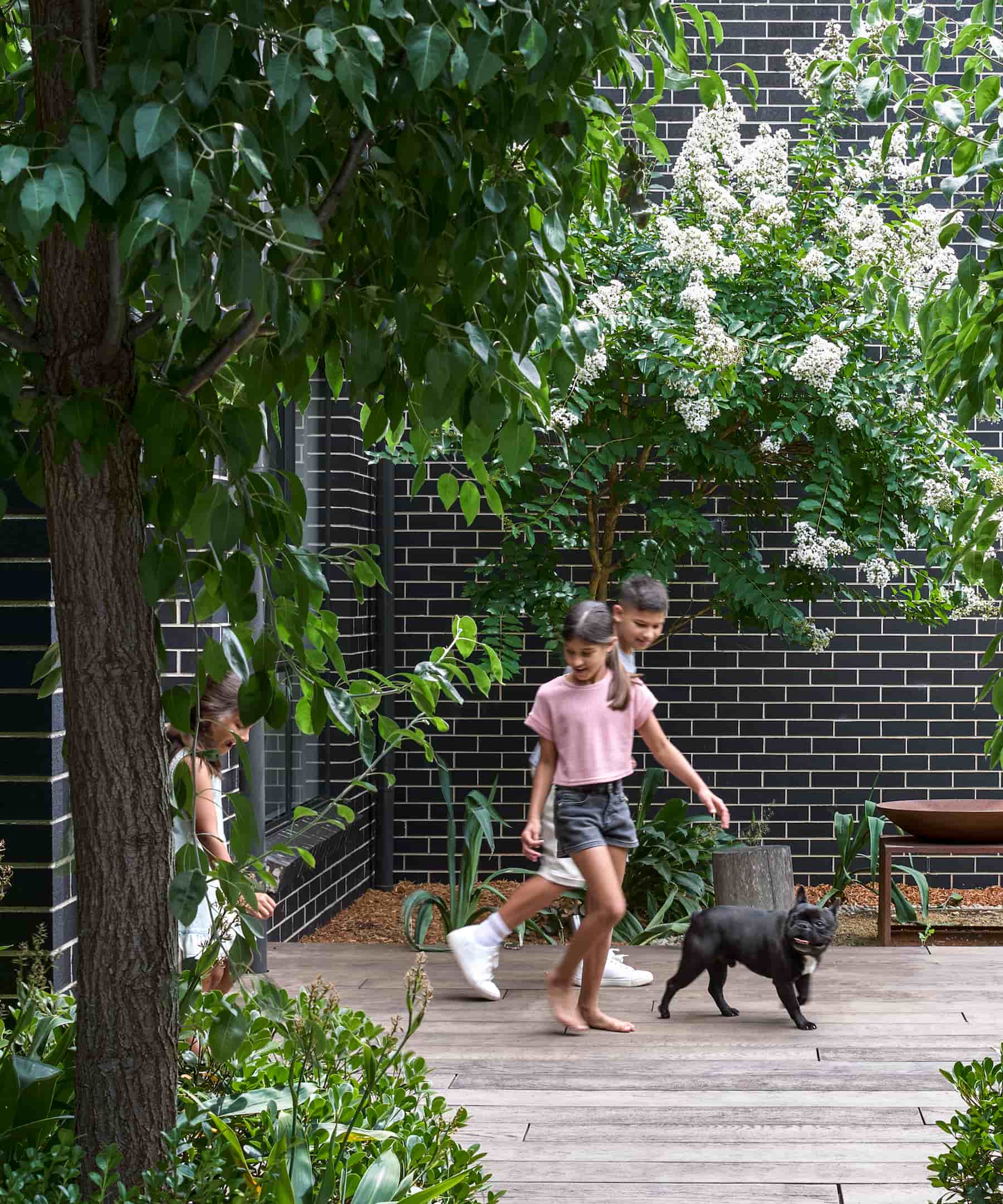
- Connection by choice – shared outdoor areas or communal spaces when desired
Architects are already seeing a surge in demand for homes that can accommodate multiple households within a single footprint, while still preserving privacy and independence. In many ways, this is less about compromise – and more about designing smarter from the outset.
One footprint, two homes: a practical solution
For many buyers, the appeal of a dual-living or duplex-style home is simple: It allows two households to share the cost of land, while still maintaining autonomy. This model can unlock:
- Earlier entry into the property market
- Access to better locations or larger homes
- Reduced individual financial burden
- Long-term flexibility (including rental potential or resale options)
Historically, dual occupancy was often seen as a niche or investor-led approach. Today, it’s becoming a mainstream consideration – particularly among younger buyers who value both independence and financial pragmatism.
A more human way to live
Beyond the financial logic, there’s a lifestyle shift underpinning this trend. Shared living can offer:
- Built-in support networks
- Greater day-to-day connection
- Shared responsibilities
- A stronger sense of community at home
In a time where many feel increasingly stretched – financially and socially – this model brings something quietly powerful back into focus: living in a way that feels both sustainable and connected.
Rethinking what “home” means
What we’re seeing isn’t a temporary adjustment – it’s a structural shift. The Australian housing market is no longer shaped by a single buyer profile or life stage. It’s a multi-generational, multi-pathway landscape where flexibility is key. For builders, designers, and buyers alike, this presents an opportunity:
To move beyond the one-size-fits-all home – and instead create spaces that reflect how people actually want (and need) to live.
Because increasingly, the future of homeownership isn’t about doing it alone. It’s about designing a way forward – together.
A smarter way to step into the market – together
If you’re exploring ways to make homeownership more achievable, a dual-living or duplex design could open new possibilities.
At Homes by ZAC, we design homes that balance independence and connection – allowing two households to share the journey without compromise. Talk to us about your plans on 1-300 350793 or send us an enquiry and we’ll have a Building & Design Consultant make contact.

Let's build your dream home together
Personal, considered and built to last. You'll feel the difference.
Get in touch